Charting Jet Lag Effects on Competitor Outputs and Resulting Market Shifts in Multi-Sport Accumulators Across Football, Tennis, and Racing Circuits
Wendy Perry · Oct 14, 2026
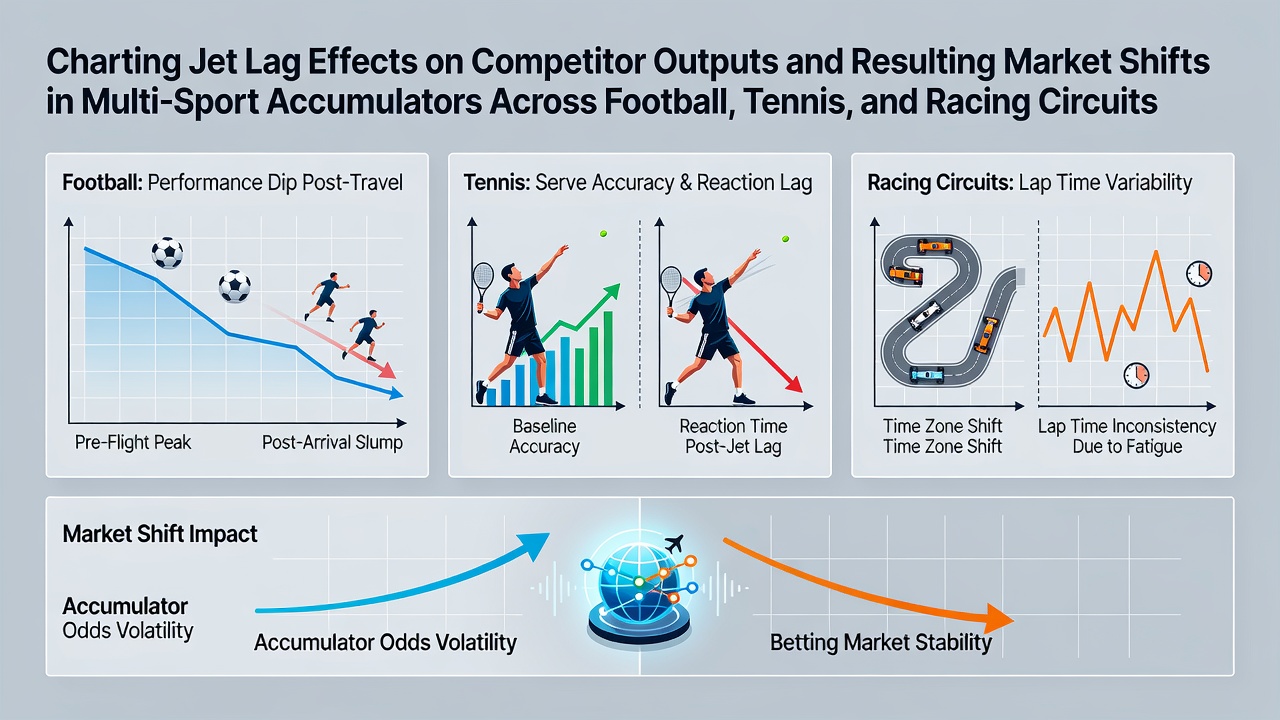
Charting Jet Lag Effects on Competitor Outputs and Resulting Market Shifts in Multi-Sport Accumulators Across Football, Tennis, and Racing Circuits
Jet lag disrupts circadian rhythms in athletes who cross multiple time zones, and researchers have documented measurable drops in reaction times, endurance, and decision-making accuracy across football, tennis, and horse racing. Data from long-haul flights shows that westward travel often produces milder effects than eastward journeys, yet both directions create performance variances that betting markets incorporate into odds adjustments for multi-sport accumulators. Observers note these shifts become especially relevant during October 2026 when several major tournaments and race meetings coincide with international travel schedules.
Physiological Impacts Documented in Football and Tennis
Studies tracking elite footballers after transatlantic or European flights reveal reduced sprint speeds and increased error rates in passing accuracy during the first 48 hours post-arrival. Similar patterns appear in tennis, where serve consistency declines and unforced errors rise following flights exceeding six hours. Those who examined match statistics from ATP events held after major tournaments found that players arriving from distant continents posted lower hold percentages in early rounds compared with rested competitors. These outputs feed directly into accumulator models because football half-time results and tennis set-win probabilities shift when fatigue compounds existing form variables.
Performance Data from Racing Circuits
Horse racing presents a distinct case because both human jockeys and equine athletes experience travel stress. Records from international meetings indicate that thoroughbreds flown across hemispheres require extended acclimatization periods before regaining peak stride lengths and recovery heart rates. Jockeys report altered sleep patterns that affect split-second judgments at the start and during tight finishes. Market analysts have recorded corresponding adjustments in starting prices when riders or horses cross time zones shortly before race day, creating ripple effects in multi-leg accumulators that combine racing results with football or tennis outcomes.
Market Adjustments and Accumulator Pricing
Betting operators monitor travel itineraries and physiological research to recalibrate odds in real time. When prominent football squads or tennis players undertake long-haul journeys, early lines often widen to reflect elevated uncertainty, while later adjustments tighten once performance data emerges. Racing markets incorporate similar variables through trainer and jockey reports. These movements alter the value propositions within cross-sport accumulators because a single underperforming leg due to jet lag can shift overall payout structures. Figures from industry reports show that accumulator builders increasingly factor circadian disruption metrics into their selections during periods of dense international scheduling.
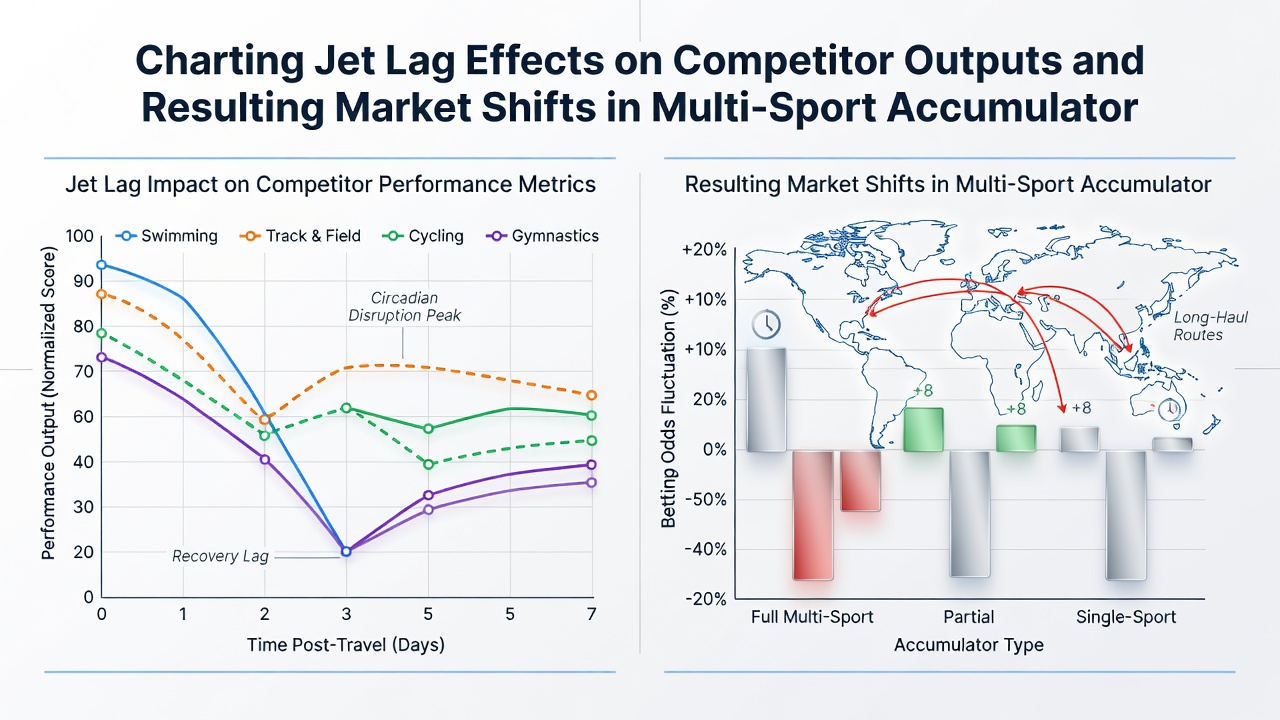
Case Examples from Recent Seasons
One analysis of Premier League fixtures following Champions League matches in distant venues demonstrated elevated concession rates in the opening 30 minutes of domestic games. Tennis tournaments scheduled immediately after long flights produced higher rates of early-round upsets when seeded players faced local competitors. In racing, several Group 1 events featured notable drifts in odds for imported runners whose connections had limited time to adjust to new conditions. Each instance contributed to revised accumulator probabilities that reflected the documented performance decrements rather than baseline form alone.
Research Sources and Measurement Approaches
Investigations conducted by the National Institutes of Health have quantified sleep disruption and cognitive performance declines in athletes after rapid time-zone changes. Additional work from the Australian Institute of Sport has tracked heart-rate variability and neuromuscular function in both human and equine subjects, supplying data that markets reference when pricing events. These objective measurements allow accumulator platforms to integrate travel-related risk factors alongside traditional statistics such as expected goals, serve percentages, and sectional times.
October 2026 Scheduling Considerations
The calendar for October 2026 includes overlapping international football qualifiers, late-season tennis events, adn major racing festivals that require extensive travel for many participants. Organizers publish detailed schedules well in advance, enabling analysts to identify potential jet-lag clusters before markets open. Historical patterns suggest that certain venues experience more pronounced effects because of flight durations and arrival timing relative to competition start times. Accumulator constructors who monitor these patterns can adjust stake distributions accordingly when combining selections across the three sports.
Conclusion
Documented physiological responses to jet lag produce quantifiable changes in competitor outputs that betting markets translate into adjusted odds for multi-sport accumulators. Football passing accuracy, tennis serve holds, and racing sectional times all show measurable shifts following long-distance travel, and these shifts appear consistently in performance databases. As October 2026 approaches, the intersection of dense schedules and transcontinental movements will continue to supply fresh data points for those tracking market movements across these disciplines.