Decoding Travel Logistics in Professional Tennis Circuits and Golf Tours
Elena Hoffmann · Sep 16, 2026
Decoding Travel Logistics in Professional Tennis Circuits and Golf Tours
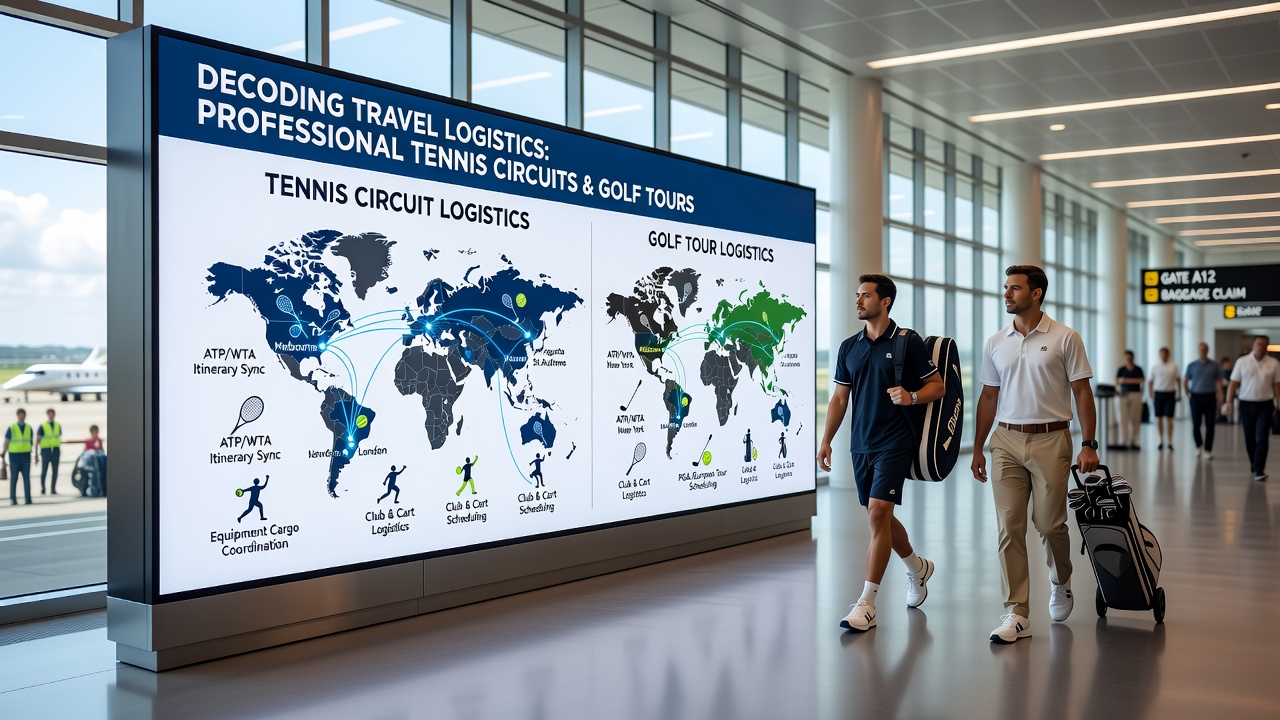
Professional tennis circuits and golf tours operate on tightly coordinated global schedules that demand precise coordination between venues, time zones, and recovery windows. Players move between continents multiple times each season, with logistics teams handling flights, ground transport, equipment shipments, and accommodation blocks months in advance. Data from tour operations shows that top-ranked athletes in both sports complete between 15 and 25 international trips annually, depending on ranking and event participation.Tennis Circuit Routing Patterns
The ATP and WTA calendars interlink hard-court, clay, and grass seasons across four major regions, creating compressed travel sequences during the spring European swing and the autumn Asian hard-court block. A player finishing the Australian Open in late January often proceeds directly to South American clay events before shifting to North American indoor tournaments, with commercial flights and occasional charter segments filling gaps between stops. Tournament directors publish provisional schedules 12 months ahead, yet last-minute withdrawals and weather delays force rapid rebookings that ripple through logistics providers.
Grand Slam events anchor the calendar and attract the largest fields, requiring additional staff for credential processing and practice-court allocation upon arrival. Between the US Open and the start of the Asian swing in September 2026, several top players are expected to route through Tokyo and Beijing before ending the season in Europe, a sequence that crosses the international date line twice within three weeks. Logistics coordinators track equipment containers via RFID tags while monitoring player medical files to adjust rest protocols after each long-haul segment.
Golf Tour Movement Across Continents
The PGA Tour, DP World Tour, and LIV Golf each maintain separate yet overlapping calendars that send competitors between North America, Europe, Asia, and Australia. Major championships dictate peak travel density, with the Masters, PGA Championship, US Open, and Open Championship drawing fields that converge from multiple continents within single weeks. Data from the PGA Tour indicates average flight distances per player exceed 80,000 miles in a full season, with equipment trailers and caddie support teams moving in parallel convoys.
September 2026 features the conclusion of the FedEx Cup playoffs alongside the start of the DP World Tour’s Asian swing, prompting many dual-membership players to schedule transatlantic connections that land them in both regions within five days. Ground-transport contracts with specialist firms ensure clubs and apparel reach each venue 48 hours before first practice rounds, while medical staff coordinate with local hospitals for any required treatments upon landing.
Time-Zone Adaptation and Recovery Protocols
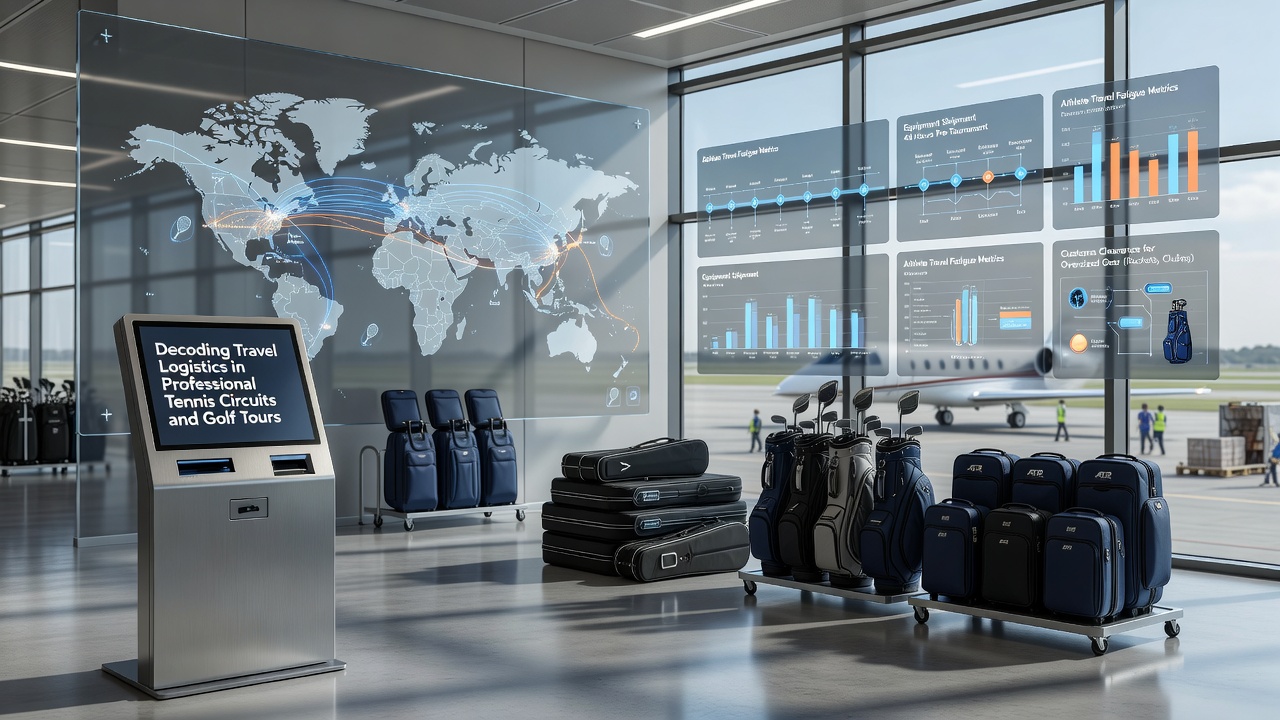
Both sports rely on sports-science teams that apply light-exposure schedules and meal-timing adjustments to mitigate circadian disruption. Research published by the Australian Institute of Sport demonstrates that athletes crossing more than five time zones experience measurable declines in serve accuracy and putting consistency for up to 72 hours without structured interventions. Tennis players often arrive three to four days early for key events, whereas golf professionals frequently compress arrival windows to two days because stroke-play formats allow on-site practice rounds that double as adaptation sessions.
Charter flights equipped with lie-flat seating and controlled cabin lighting have become standard for top-50 players in both disciplines, reducing the cumulative fatigue associated with commercial routing changes. Nutritionists pre-load aircraft with meals aligned to destination time zones, and strength coaches adjust gym sessions to maintain muscle activation despite disrupted sleep cycles.
Equipment and Support-Team Coordination
Tennis rackets and golf clubs travel in climate-controlled cases that protect graphite and string tension from pressure changes during long-haul flights. Dedicated freight forwarders consolidate multiple players’ gear into single shipments when schedules align, cutting costs and carbon output. Support staff, including physiotherapists, agents, and family members, receive separate ticketing and hotel blocks managed through centralized tour databases updated in real time.
Visa requirements and customs declarations for high-value equipment add another layer of planning, particularly when crossing between Schengen and non-Schengen jurisdictions or entering countries with strict import rules on sporting goods. Tour officials maintain updated regulatory guides that logistics teams reference before each departure.
Conclusion
Travel logistics in professional tennis and golf continue to evolve through integrated scheduling software, dedicated aviation partners, and evidence-based recovery frameworks. As the 2026 season progresses through its September phase, the ability to move athletes, equipment, and support personnel efficiently across multiple continents remains central to sustained performance on both circuits.