Schedule Density Ripples: Rest Gaps and Fixture Piles Reshape Selections Across Soccer Leagues, Tennis Tours, and Racing Meets
Wendy Perry · Nov 11, 2026

Schedule Density Ripples: Rest Gaps and Fixture Piles Reshape Selections Across Soccer Leagues, Tennis Tours, and Racing Meets
Fixture piles create measurable shifts in team selections and individual performances throughout soccer leagues, tennis tours, and racing meets, with data showing how rest gaps influence outcomes in November 2026 calendars. European domestic competitions run alongside international windows while ATP and WTA schedules compress into indoor hard-court swings, and thoroughbred meetings stack across multiple continents. Observers note that clubs and players adjust lineups and training loads when consecutive matches leave minimal recovery intervals.
Soccer League Congestion Patterns
Premier League and Champions League double-headers force managers to rotate squads when teams face three fixtures inside eight days, and figures from the European Club Association reveal that sides with under 72 hours between games record higher substitution rates in the second half. Mid-November 2026 brings the return of international qualifiers that overlap with domestic rounds, so coaches often rest key midfielders after long-haul travel. Data indicates that teams granted an extra rest day before a weekend fixture maintain higher possession percentages in the opening 30 minutes compared with sides coming off midweek European ties.
Coaches track cumulative minutes played across competitions, and those who study workload metrics find that full-backs accumulate the largest spikes during congested periods. One study released by the Union of European Football Associations highlighted how defensive errors increase when central defenders log more than 270 minutes across a seven-day window. Clubs therefore insert younger squad members into starting lineups on certain matchdays to preserve senior players for decisive later rounds.
Tennis Tour Compression and Recovery Windows
ATP Finals qualification races and WTA year-end events pack multiple tournaments into a four-week block during November 2026, leaving players with limited rest between 500-level and 1000-level stops. Tournament directors schedule main-draw matches on consecutive days while qualifiers often compete twice in 24 hours just to reach the first round. Researchers from the International Tennis Federation report that players who receive at least 48 hours between matches win 58 percent of deciding sets, whereas those on shorter turnarounds see that figure drop below 45 percent.
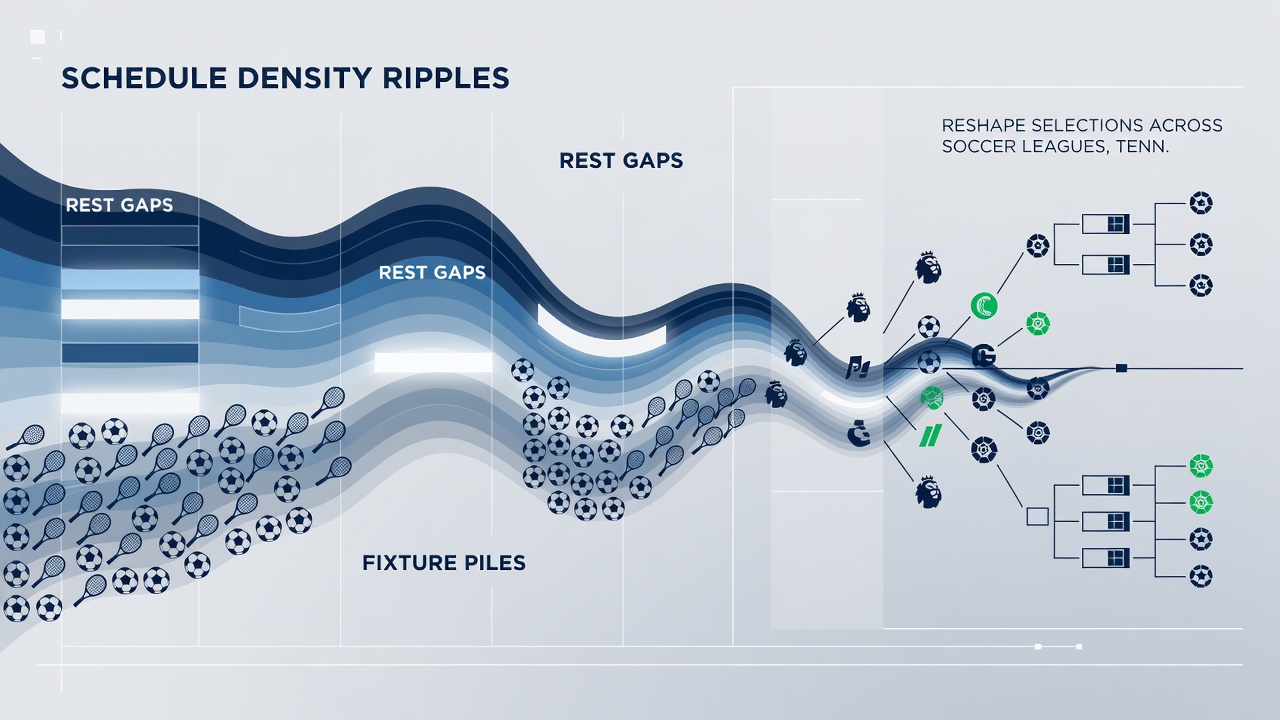
Physical preparation teams monitor serve speeds and movement data across successive days, and patterns emerge where baseline consistency declines after three matches in five days. Players who enter the second week of a Masters event without a rest day frequently adjust tactics toward shorter rallies. Tournament medical staff record increased requests for physio sessions during these stretches, and scheduling software now incorporates recovery algorithms that help seed players avoid early-round clashes on the same day.
Racing Meet Stacking and Jockey Rotations
Flat and jumps meetings in Britain, France, Australia, and the United States pile fixtures into November cards, with some jockeys booked for eight rides across two tracks on the same afternoon. Handlers evaluate ground conditions that change between morning and evening races, while trainers adjust declarations when horses return from long-distance travel. Records kept by the Australian Racing Board show that runners with at least 14 days between starts post higher win rates than those appearing on seven-day cycles during the spring carnival period.
Stewards monitor declared runners for signs of fatigue, and meetings that add extra races to already full programs sometimes see withdrawal rates climb. Jockey agents balance bookings across meetings so that riders avoid consecutive days of maximum mounts, and data collected at major tracks indicates that strike rates dip when a rider exceeds 12 mounts inside 72 hours. Owners therefore plan campaigns around key fixtures rather than accepting every available entry.
Cross-Sport Effects on Selection Strategies
Analysts who compile performance databases across the three sports observe that rest-gap advantages appear most clearly in the later stages of each event. Soccer teams that rotate effectively carry higher goal tallies into the final month of the season, tennis players with scheduled byes advance further in draw-heavy tournaments, and racing stables that space entries maintain stronger strike rates through the winter program. Scheduling software used by federations and tour organizers now factors in travel time and cumulative workload when releasing calendars for 2027.
Those who follow selection announcements note that late changes often trace back to fixture density rather than form alone. A midfielder rested from a midweek cup tie returns fresher for the league match the following weekend, while a tennis player who skips an exhibition event preserves energy for the season-ending championships. Racing trainers likewise withdraw a horse from a midweek card when a more suitable engagement appears four days later.
Conclusion
November 2026 calendars illustrate how rest gaps and fixture piles continue to reshape selections across soccer leagues, tennis tours, and racing meets. Data compiled by governing bodies and research institutions shows that recovery intervals directly influence substitution patterns, match-win percentages, and declaration rates. Organizers respond by refining schedules while participants adapt lineups and training loads to navigate the density. These adjustments remain visible in performance metrics released throughout the month and into the closing weeks of the year.